When Healthy Living Starts to Feel Like Losing Yourself
The Glow-Up That Didn't Feel Like One
It starts with the best intentions. You swap out the junk food, download a meditation app, commit to 6 a.m. workouts, and start replacing everything in your apartment with clean lines and neutral tones. From the outside, it looks like a transformation. And in a lot of ways, it is.
But somewhere around week six — maybe week ten — something feels off. You're healthier, technically. You're more disciplined. And yet, when you look in the mirror or scroll back through old photos, there's this strange, low-grade sadness. Like a version of yourself quietly left the building while you were busy optimizing.
This is what I've started calling the wellness paradox: the moment your healthiest habits begin to cost you something deeply personal — your sense of style, your playfulness, your creative self-expression. And it happens to more women than you'd think.
When Wellness Becomes a Uniform
Let's talk about the wardrobe piece first, because it's often the most visible symptom.
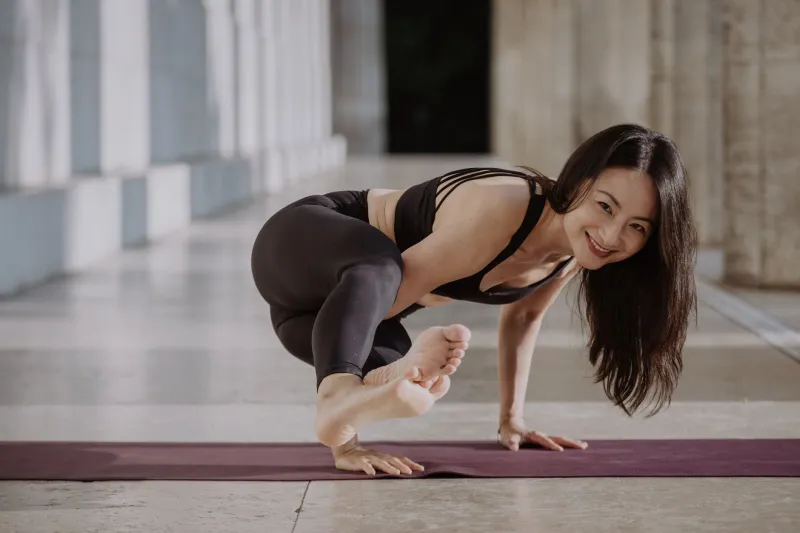
There's a certain aesthetic that's become almost synonymous with the wellness lifestyle — and if you've spent any time on Instagram or TikTok lately, you know exactly what it looks like. Matching sets in sage green. White sneakers. Linen everything. A very specific kind of minimalism that signals health, calm, and discipline all at once.
None of that is inherently wrong. But here's the thing: for a lot of women, adopting that aesthetic isn't an expression of who they are — it's a costume for who they're trying to become. And when you spend months dressing for an aspirational version of yourself rather than your actual self, you can start to feel genuinely disconnected from your own identity.
Your style is one of the most immediate ways you communicate with the world — and with yourself. When that communication gets flattened into a wellness uniform, something real is lost.
The Discipline Trap
Strict wellness routines have a sneaky way of bleeding into every corner of your life. What starts as cutting out processed food can slowly become an anxious relationship with any meal that doesn't fit the plan. A commitment to minimalism can turn into guilt every time you want to buy something colorful or fun or just a little extra.
Discipline, when applied with too heavy a hand, can start to feel like punishment dressed up as self-care. And that's a meaningful distinction.
Genuine wellness should expand your life — your energy, your confidence, your capacity for joy. When it starts shrinking things instead — your wardrobe choices, your social flexibility, your willingness to just play a little — it's worth pausing to ask what you're actually optimizing for.
Your Body Changed. Your Style Doesn't Have to Follow a Script.
One of the most common places this tension shows up is in the aftermath of a physical transformation. You've lost weight, gained muscle, or simply started feeling more at home in your body — and now there's this unspoken pressure to dress in a way that shows it. Clean, streamlined, athletic-adjacent. Like your wardrobe should reflect your discipline.
But here's what no one really talks about: your body changing doesn't mean your personal style has to change direction entirely. If you loved bold prints before, you can still love bold prints now. If maximalism has always made your heart happy, a smaller waist doesn't require you to trade that in for capsule-wardrobe neutrals.
Wellness is about feeling good in your body. Style is about feeling good in your self. Those two things can — and should — coexist.
Reclaiming Individuality Inside a Healthy Life
So how do you pursue real wellness goals without losing the thread of who you are? A few things that actually help:
Let your style inform your wellness, not the other way around. If bright colors lift your mood, wear them to the gym. If wearing a great outfit makes you feel confident enough to actually show up to that workout class, that matters. Your aesthetic isn't separate from your wellbeing — it's part of it.
Audit your "healthy" habits for joy. Go through your routines and ask honestly: does this feel good, or does it just feel righteous? There's a difference between something that genuinely nourishes you and something you're doing because the wellness internet told you it's what disciplined people do. The former is worth keeping. The latter deserves a second look.
Give yourself permission to be inconsistent. The most grounded, genuinely well women I know aren't perfectly consistent. They eat the birthday cake. They skip the workout when they need rest. They buy the ridiculous statement earrings because they're fun. Wellness that has no room for your actual humanity isn't wellness — it's just another form of perfectionism.
Reconnect with the things you loved before the optimization. What did you wear before you started the journey? What did your space look like? What foods did you actually enjoy? You don't have to go back to everything — but revisiting those touchstones can remind you which parts of your old self are worth bringing forward.
Wellness Should Feel Like Coming Home
At its best, a healthy lifestyle should make you feel more like yourself — not less. More energized, more present, more able to show up for the things and people you love. It should create space for your personality, not quietly erase it in the name of discipline.
If your wellness routine is working, you should feel like the most alive, most expressive version of you — not a muted, optimized approximation of someone else's vision board.
So if something feels off, trust that feeling. It might just be your sense of self, knocking on the door, asking to be let back in.