Getting Dressed Before You're 'Ready': Why You Don't Have to Earn the Right to Wear What You Love
Let's be honest about something that doesn't get said enough: a huge portion of what gets marketed to us as "wellness" is really just a dressed-up permission slip. Lose the weight, clear up your skin, fix your posture, optimize your gut, then — the implication goes — you'll deserve the good stuff. The fun outfit. The bold color. The dress that makes you feel like yourself.
And somehow, fashion has gotten completely tangled up in that same story.
If you've ever caught yourself thinking I'll wear that when I lose ten pounds or I'm not really a person who can pull that off right now, you've already felt it. That quiet, insidious voice that tells you style is something you have to earn. That joy in getting dressed is conditional. That the way you look today — in this body, at this age, in this season of life — isn't quite enough to justify trying.
Here's what I want to say clearly: that voice isn't yours. It was handed to you.
How Two Industries Built a Trap Together
The wellness industry and the fashion industry have always had a complicated relationship, but somewhere in the last decade or so, their messaging fused into something genuinely difficult to untangle. Wellness sold us the idea that our bodies are perpetual renovation projects. Fashion sold us the idea that certain styles are only for certain people — certain sizes, certain ages, certain levels of "put-together."
Together? They created a loop that's almost impossible to escape from the inside. You feel bad about your body, so you invest in wellness products and routines to fix it. While you're "fixing" it, you hold off on really dressing the way you want — that feels like a reward for the finish line, not something you do mid-journey. And because you're not dressing in a way that genuinely reflects who you are, you feel a little off, a little invisible, a little less like yourself. Which, conveniently, makes you more susceptible to the next product promising transformation.
Rinse. Repeat. Buy more.
It's not a conspiracy so much as it's just... very good marketing. And we've all fallen for it at some point, because it's baked into the culture so deeply that it feels like common sense.
The Myth of the "Right" Body for Fashion
One of the most persistent lies in this space is that fashion — real fashion, the kind that's expressive and fun and a little bit daring — is designed for a specific kind of body. Usually a young one. Usually a thin one. Usually one that hasn't been through much yet.
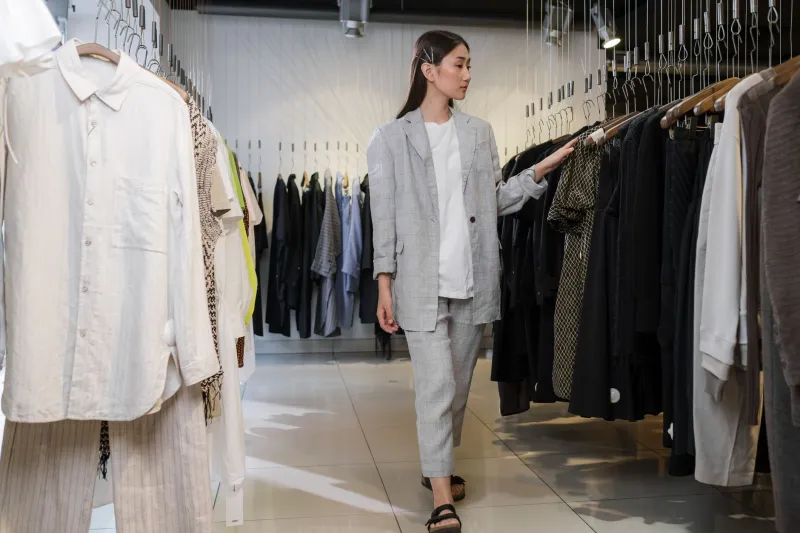
But go look at the women you actually find most stylish in real life. Not on a billboard — in your neighborhood, at your favorite coffee shop, at a family gathering. Chances are, they're not all the same size or age. What they do tend to have in common is that they seem genuinely unbothered. They're wearing what they like. They're not waiting for permission.
That ease isn't accidental. It's a choice. And often, it's a choice they made after spending years in the waiting room of when I'm ready, before finally deciding to just walk out of it.
Getting Dressed as a Form of Resistance
There's something quietly rebellious about putting on an outfit you love on a day when you don't feel your best. When your body feels unfamiliar, when you're navigating a health issue, when you've gained weight or lost it in ways that weren't planned, when you're just tired and bloated and having a very human Tuesday — choosing to get dressed with intention anyway is a small act of defiance.
It says: I'm not waiting. I'm here now. This version of me matters.
That's not toxic positivity or ignoring real feelings. You're allowed to have complicated relationships with your body — most of us do. But those feelings don't have to be the gatekeeper to your own closet. You can feel uncertain about how you look and still reach for the earrings that make you happy. You can be in the middle of a health journey and buy the jeans that fit you today instead of the ones you're hoping to fit into someday.
Wearing clothes that make you feel good right now isn't giving up. It's showing up.
What Reclaiming Your Closet Actually Looks Like
This doesn't have to be dramatic. You don't need to overhaul your wardrobe or declare a revolution. It starts smaller than that.
Stop saving things for later. The nice blouse, the shoes you love too much to wear, the dress you bought for a version of yourself you're still becoming — wear them now. Wear them to the grocery store. Wear them on a random Wednesday. There's no moment coming that's more worthy of the things you love than this one.
Dress for the body you're in today. Not the one you had five years ago, not the one you're working toward. If something doesn't fit well right now, it's not going to make you feel good no matter how much you love it in theory. Clothes that actually fit your current body are one of the most straightforward style upgrades you can make — and it has nothing to do with size.
Notice the stories you tell yourself in the fitting room. I can't wear that is almost never a fact. It's usually a feeling dressed up as a rule. Question it. Try the thing anyway. You might be surprised.
Buy what makes you feel like yourself, not what you think you should want. The wellness industry sells aspiration. Fashion marketing sells aspiration. Neither of them knows you. Your instincts about what makes you light up when you put it on? Those are worth listening to.
Style Isn't a Reward
The version of you that exists right now — with all the things you're working through, all the ways your body is changing, all the chapters you're in the middle of — she deserves to get dressed in a way that feels good. Not eventually. Not after. Now.
The wellness industry will keep moving the goalposts. There will always be another thing to optimize, another standard to meet before you're officially "well" enough to stop worrying about yourself. Fashion marketing will keep producing images that quietly suggest you're not quite there yet.
You don't have to believe any of it.
Getting dressed with joy — with color, with personality, with the pieces that make you feel most like yourself — is one of the simplest ways to opt out of a system that profits from your insecurity. It costs you nothing. It gives you your morning back. And it turns out, when you stop dressing for some future version of yourself and start dressing for the one who's actually here, everything feels a little more like yours.
That's not a small thing. That's the whole point.