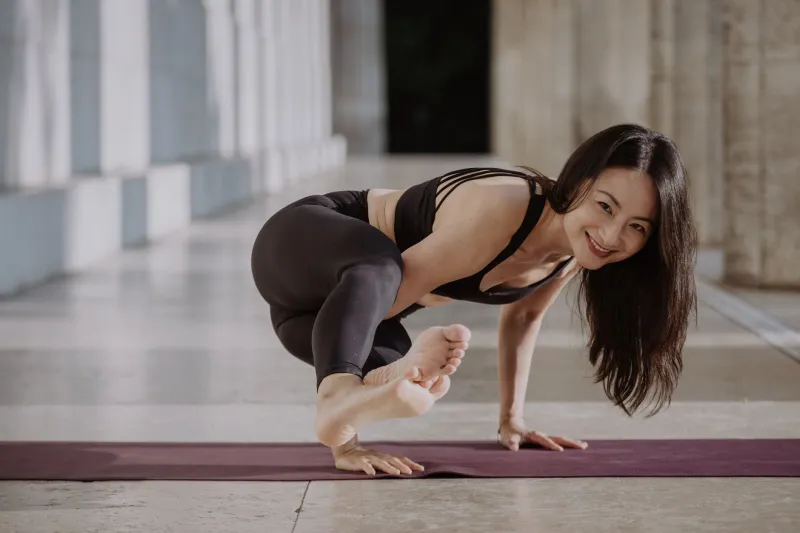
When Self-Care Becomes the Problem: Breaking Free From the Wellness Trap
Somewhere between your 12-step skincare routine, your 6 a.m. Pilates class, your daily journaling practice, and your carefully timed magnesium supplements, something went sideways. Self-care was supposed to feel good. So why does it feel like another job you're failing at?
You're not imagining it. A growing number of women are waking up to a strange realization: the very habits meant to reduce their stress are quietly generating more of it. There's a name for this phenomenon — wellness burnout — and it's more common than the #selfcare hashtag would have you believe.
The Pressure Behind the Practice
Here's the thing about modern wellness culture: it sold us the idea that health is something you optimize, not something you simply live. Suddenly, a walk around the block wasn't enough — it needed to be tracked, zone-targeted, and followed by a protein shake. Sleep became a metric. Hydration became a ritual. Even rest had to be productive rest.
The wellness industry in the US is worth over a trillion dollars, and a significant chunk of that growth is fueled by the idea that there's always more you could be doing. Another supplement, another practice, another morning routine overhaul. For a lot of women, keeping up with it all doesn't feel empowering — it feels relentless.
Psychologists call this "maladaptive perfectionism" when applied to health habits. Basically, when the standard for "taking care of yourself" becomes impossibly high, missing a single workout or skipping your evening face mask can trigger genuine guilt and anxiety. The routine designed to calm you down starts running you ragged instead.
Signs Your Wellness Routine Has Flipped on You
It can be hard to spot because it sneaks up slowly. But a few telltale signs that your self-care has crossed into self-pressure territory:
- You feel worse on days when you skip your routine, not because you're physically tired, but because you feel like you've failed.
- Your habits feel more like obligations than choices.
- You spend more time planning wellness activities than actually enjoying them.
- You've started comparing your routine to what you see on social media — and yours always comes up short.
- The thought of a "rest day" makes you uneasy rather than relieved.
If any of these land, welcome to the club. It's a big one.
Why "More" Isn't the Answer
Here's something the wellness content machine rarely tells you: the research on self-care consistently points to consistency and simplicity — not volume — as the keys to lasting benefit. A 10-minute walk you actually take every day does more for your mental health than an elaborate routine you dread and eventually abandon.
Dr. Kristin Neff, a leading researcher on self-compassion, has spent years studying what actually makes people feel better. Her findings are almost radical in how simple they are: treating yourself with the same kindness you'd offer a good friend is more effective than any structured wellness protocol. Meaning, sometimes the most powerful thing you can do for your health is... let yourself off the hook.
That's not an excuse to stop caring for yourself. It's a reframe. Self-care should feel like something you're giving yourself, not something you're demanding of yourself.
Real Women, Reimagined Routines
Take Marissa, a 34-year-old marketing director in Chicago who spent two years building what she called her "ideal morning routine" — 5 a.m. wake-ups, cold showers, meditation, journaling, a workout, and a green smoothie before 8 a.m. "I kept waiting to feel like the person in the YouTube videos," she says. "Instead I just felt exhausted and resentful by Tuesday."
She eventually stripped everything back to three non-negotiables: seven hours of sleep, a daily walk (no tracking, no pace goals), and one cup of coffee enjoyed slowly before checking her phone. "Honestly? I feel better than I did with the full routine. I think I just needed to stop treating my body like a project."
Her story isn't unique. More and more women are quietly abandoning the maximalist wellness model in favor of something smaller, slower, and a lot more sustainable.
Building a Routine That Actually Restores You
If you're ready to step off the hamster wheel, here's a gentler way forward:
Start with subtraction, not addition. Instead of adding another habit to your roster, ask yourself which current practices you actually look forward to — and which ones you do out of obligation or guilt. Cut the latter, at least for a few weeks, and notice how you feel.
Anchor to sensation, not achievement. The goal of self-care isn't to check a box — it's to feel something. Before starting any habit, ask: what do I want to feel as a result of this? Calmer? More energized? More grounded? Let that feeling guide you, not a timer or a streak counter.
Protect one truly unstructured moment per day. No agenda, no optimization. Maybe it's ten minutes on your porch with coffee. Maybe it's a bath without a podcast playing. These unstructured pockets of time are, ironically, among the most restorative things you can give yourself — and they cost nothing.
Give yourself permission to evolve. Your needs in January aren't your needs in July. A wellness routine that's rigid enough to cause guilt when life gets in the way isn't really serving you. Build in flexibility from the start.
Redefine what counts. Calling your mom, laughing until your stomach hurts, taking a nap without setting an alarm — these are all legitimate forms of self-care. You don't need a $90 serum or a six-week program to nourish yourself.
The Quiet Shift
The most radical thing you can do for your wellness right now might be to stop performing it. Stop building the routine for the version of yourself you think you should be, and start asking what the version of yourself you actually are actually needs today.
Some days that's a long run and a green smoothie. Other days it's canceling plans and watching reality TV in your pajamas. Both count. Both are valid. Both are, in their own way, exactly what self-care was always supposed to look like — before it got complicated.
Your well-being doesn't need to be a project. It just needs to be yours.